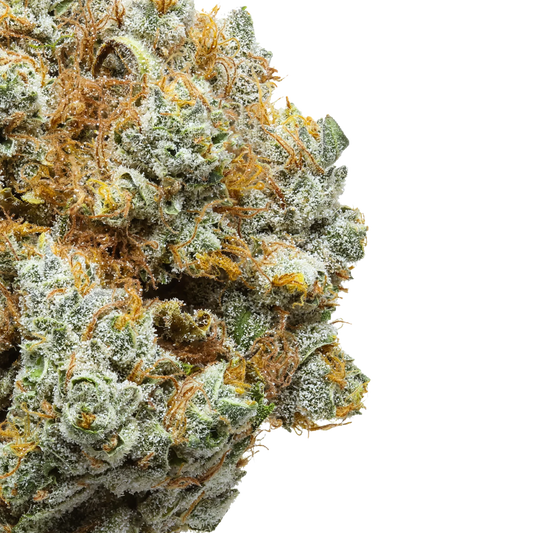
CBG flower worth smelling
Here's the honest state of CBG flower: most of it has almost no smell. That isn't laziness on anyone's part — CBG genetics are notoriously hard to grow well, and the plants tend to come out low in terpenes no matter who's growing them. Which is exactly why we phenohunt ours, growing out seedlings by the dozen and keeping only the rare plants with real aroma.
Our latest keepers came out of a hunt this year on a Key Lime CBG line, which produced two plants that genuinely smell of key lime. The rest didn't make the cut. Those two were re-vegged and turned into mothers, and they're what feeds production now. That's the standard: we'd rather sell one CBG strain that smells like something than five that smell like hay.
Like everything we grow, Type 4 is raised indoors, dried cold and slow for fourteen days, hand trimmed, and shipped with a full certificate of analysis.
What CBG is
Cannabigerol is the cannabinoid every other cannabinoid starts life as — the precursor the plant converts into THCa, CBDa and the rest as it matures. That's why it gets called the mother cannabinoid. In most plants almost all of it has been converted away by harvest; Type 4 strains are bred specifically so it doesn't, leaving CBG as the dominant cannabinoid, typically somewhere in the 10–20% range, with virtually no THC at all.
What it feels like, and who it's for
Our grower's description is the clearest one we've heard: the effect is closer to a Red Bull or a cup of coffee than to anything else in the catalog. A distinct lift, non-intoxicating, and short — thirty to forty-five minutes rather than an afternoon.
On flavour, regulars describe CBG as lighter and brighter than CBD, usually very smooth, with a creaminess to it and sometimes a cool menthol note underneath. It's the most unusual-tasting flower we sell.
Two groups buy it. People who want a morning lift with no high whatsoever, and people who mix it — a little CBG blended into CBD or THCa flower, which regulars say gives the whole bowl an extra edge of brightness. If you've never tried it, buying an eighth alongside a Type 3 strain and smoking them side by side is the fastest way to understand the difference.
The most future-proof flower we sell
CBG plants naturally produce very little THC, which makes Type 4 the calmest place to be standing while the federal rules change on December 11, 2026. When the standard moves to total THC, large parts of the industry's catalog get squeezed by the new maths — CBG passes it comfortably, by nature rather than by breeding effort. Our grower is blunt about it: CBG is always going to stay under 0.3%.
If you're building a rotation you want to still be able to buy next year, this is the strain type to get to know now. Background in our December rule guide.
CBG flower FAQ
What is CBG?
Cannabigerol — the cannabinoid every other cannabinoid begins as, which is why it's called the mother cannabinoid. Type 4 strains are bred to stay dominant in it, with naturally tiny THC levels and CBG commonly in the 10–20% range.
Does CBG flower get you high?
No — it's non-intoxicating. Our grower compares the effect to a Red Bull or a cup of coffee: a real lift, no high, and it fades inside thirty to forty-five minutes.
CBG vs CBD flower — what's the difference?
Different cannabinoid, different character. CBG reads brighter and more alert; CBD reads calmer and heavier. Both are non-intoxicating. The honest answer is that the best way to understand it is to smoke a jar of each side by side — the types explainer covers both.
What does CBG flower taste like?
Smooth and creamy, lighter than CBD, sometimes with a cool menthol note. Our Key Lime keepers are the exception that proves the rule — they actually smell of key lime, which almost no CBG does.
Can I mix CBG with other flower?
Yes, and a lot of regulars do. A little CBG blended into CBD or THCa flower is the most common way it gets used, for an extra lift across the bowl.
Will it show on a drug test?
The risk is lower than with any other flower we sell, because CBG plants produce so little THC — but full-spectrum flower always carries trace amounts, so if your job depends on a clean test, don't risk any flower product.
Why are there so few strains here?
Because we only jar CBG flower that passes the smell test, literally. Good CBG genetics are rare; we'd rather have one real strain than five flavourless ones. New keepers from the phenohunts land here first.
Is CBG affected by the December 2026 rule?
Barely — that's the point of it. CBG plants stay under the THC threshold naturally, which makes Type 4 the most future-proof category in our catalog.
How should I store it?
Same as any flower: airtight, cool, dark, not too dry.