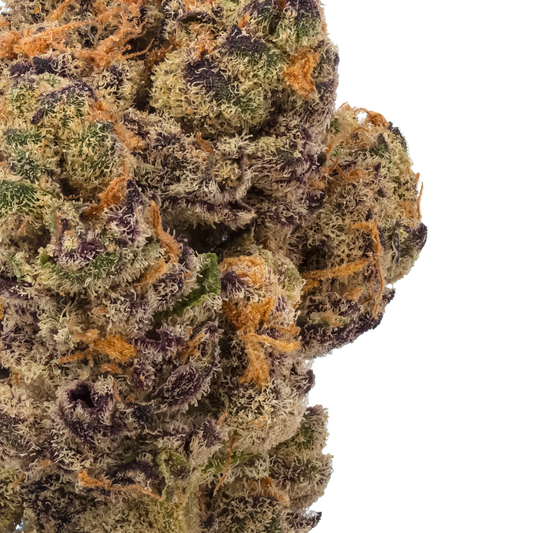
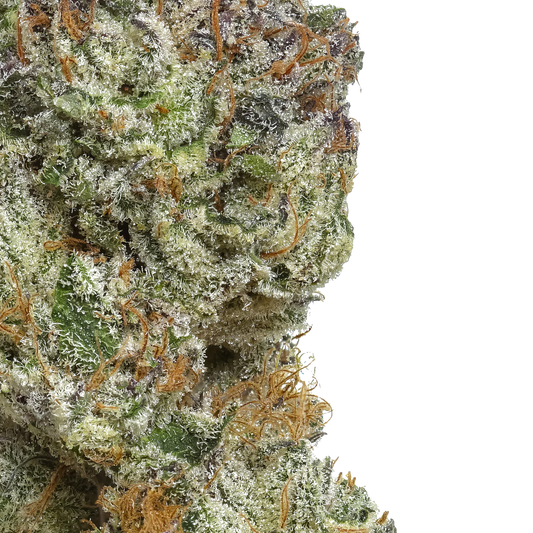
THCa flower, the craft way
Most THCa flower sold online is commodity product: grown outdoors at field scale, machine trimmed, warehoused, and shipped stale to whoever is cheapest that month. This collection is the opposite. These are small-batch strains raised indoors to the same standards that won our flower medals at the Emerald Cup and the High Times Hemp Cup, dried slow and cold for fourteen days, hand trimmed by people rather than machines, and shipped fresh with a full certificate of analysis on every batch.
We're also straight with you about what this is. THCa converts to THC when you heat it, so Type 1 flower is the classic experience, full stop. We'd rather say that plainly than hide behind chemistry, and that same honesty runs through everything here: COAs you can actually open, and reviews we never edit.
What THCa is, and why it's sold as hemp
THCa — tetrahydrocannabinolic acid — is the form THC takes in the living plant. Raw cannabis contains almost no active THC at all; it contains THCa, which converts to THC when heat is applied, whether that's a lighter, a vaporiser or an oven. This is not a loophole in the plant, it's simply how the plant works.
The legal position follows from it. Federal hemp law has, until now, defined hemp by its delta-9 THC content, and compliant THCa flower sits under that threshold while it's still in its acid form. That's why flower chemically indistinguishable from dispensary product has been shipping to doors across the country. It's also why the rule is changing — see below, because the date matters.
How strong is it, really
Our Type 1 strains commonly test in the low-to-mid 20s for THCa, and the exact number for the batch you'd receive is printed on its certificate of analysis in the COA library. Two things worth knowing about that number.
First, don't buy on potency alone. Small-batch indoor flower smokes stronger than its numbers suggest, because the terpene profile is intact and freshness does a great deal of work that percentages don't capture. A fresh 22% jar will out-smoke a stale 28% one every time.
Second, check the COA rather than the headline. Plenty of sellers quote a best-ever batch figure across a whole catalog. We publish per batch, including the ones that came in lower than we'd have liked.
The clock on this category
The federal definition of hemp changes on December 11, 2026, moving to a total-THC standard that counts THCa alongside delta-9 THC. That reshapes whether flower like this can legally be sold at all — which is why we're transparent about the date rather than quietly letting stock run down, and why our breeding program has spent years preparing compliant genetics for what comes after.
What that means practically: our grower is finishing one last proper run of his classic genetics rather than letting them fade out, and the Type 3 CBD and Type 4 CBG collections are the ones built for the other side of the line. Until December, Type 1 is here, fresh, and exactly as good as the reviews say. The full plain-English breakdown is in our December rule guide.
How to pick a strain
Same three rules as any good flower: nose first, then the COA, then the reviews.
Nose first, because terpenes decide what you'll actually experience. Our grower phenohunts specifically for pungency and for something that stands out — he'll grow thirty plants from the same seed pack and keep one, and when he's choosing he rubs the sugar leaf beside a bud mid-flower and smells his fingers. The strains that survive that process are the ones on this page.
He also hunts for something most growers never test for: terpene longevity. Some beautiful flowers lose their smell within weeks of drying, and some don't. Chemtrails, his own daily smoke, still carries full flavour three months after harvest — which he's the first to say is close to unheard of.
If you're deciding between types rather than strains, the types explainer covers the whole system in plain words.
Strains worth knowing in this collection
Chemtrails (Chem 91 × Kona Gold) found from a seed pack won after the Virginia Cannabis Cup, hunted out, and described by its grower as a golden egg. Sweet, sour, funky, fruity and gassy at once; the strain he reaches for on the way to work for the creativity and the good vibes. Holds flavour for months.
Pablo's Pineapple — straight pineapple, which is genuinely rare in a cannabis plant. Dense, deeply coloured, frosty. One of the few we try to keep permanently in stock, and it sells out anyway.
Collaboration runs — genetics from breeders we rate, including Capulator, the breeder behind MAC, and James Loud. Those land here and in Small Batch first, in runs of thirty to sixty jars.
How to read a THCa COA — including the December maths
Lab reports look intimidating and only three things on them really matter.
THCa percentage. The headline number, and the one that gets quoted. This is the acid form, sitting in the flower as grown.
Delta-9 THC percentage. The active form, which in compliant flower is a small fraction of a percent. This is the number federal hemp law has been written around until now.
Total THC. The number that matters from December 11, 2026 onward. It isn't THCa plus delta-9 — it's calculated, because THCa loses mass when it converts. The standard formula is total THC = (THCa × 0.877) + delta-9 THC. Run it on any THCa flower COA you like and you'll immediately see why the industry is in the state it's in: flower testing 24% THCa calculates to over 21% total THC, against a 0.3% limit.
That arithmetic is the whole story of December, and it's why our breeding program spent a year selecting plants that pass it rather than hoping the rule wouldn't land. Every batch we sell has its figures published in the COA library, and the fuller explanation is in the rule guide.
Top shelf vs mids, by a cup-winning grower's standard
Asked directly what separates the two, our grower gave four things in order.
Smell. First and most important. Pungency above all — something that stands out and is different, not just sweet. He'd rather have a strain that smells strange than one that smells pleasant and forgettable.
Looks. Structure, trichome coverage, colour. Easy to fake in a photograph and impossible to fake in the jar.
Effects. The final checkbox, and the one he phenohunts hardest for: something that leaves you happy and creative rather than anxious, couch-locked or paranoid.
Age. Underneath all three. Fresh flower smells, looks and performs better, and no amount of quality at harvest survives six months in a warm warehouse.
Notice what isn't on that list: the percentage on the label. The full checklist is here.
Judging what arrives
When the jar lands, there are four quick checks worth doing — and they're the same ones we run before anything gets jarred.
Open it and smell it immediately. You should get something distinct straight away. Flat or hay-like means old or badly dried, whoever sold it.
Look at the trichomes. In decent light you should see frost standing up off the bud rather than a dull dusty surface. Trichomes knocked flat is what machine trimming looks like.
Squeeze gently. It should give slightly and spring back. Crumbling to powder means over-dried; damp or spongy is a mould risk and should never have shipped.
Break a bud by hand. It should come apart in structured pieces and release more smell as it goes. If the smell doesn't intensify when you break it, there wasn't much there to begin with.
THCa flower FAQ
What is THCa flower?
THCa is the acid form of THC found in raw cannabis. Type 1 means THCa-dominant flower — the classic kind. When heated, THCa converts to THC.
Does THCa flower get you high?
Yes. When smoked or vaped, THCa converts to THC and the effect is the classic one. We'd rather tell you that plainly than hide behind chemistry.
Is THCa flower the same as marijuana?
Chemically, there's very little between them. The difference is the legal framework it's sold under, and the fact that ours ships to your door with lab results attached. Quality-wise we'd put our jars against most dispensary shelves, and the blind-judged cup results back that up.
Is THCa flower legal?
Today, hemp is federally defined by delta-9 THC content, which compliant THCa flower sits under. That definition changes on December 11, 2026 to a total-THC standard that counts THCa — a major shift for this category. State rules also vary widely and change often, so know your state's position before ordering.
Will it show on a drug test?
Yes — treat it exactly like cannabis. If you're tested for work, this product isn't for you, and no amount of legal framing changes what a lab looks for.
How strong is it?
Batch-dependent — our strains commonly test in the low-to-mid 20s for THCa, and the exact number for your batch is on its COA. Start low if you're new.
How is THCa flower different from "THCa infused" flower?
Completely different products. Ours is flower that grew this way: nothing sprayed on, dipped in, or added back. Infused or "diamond dusted" flower is ordinary flower coated in concentrate to raise its numbers. If a seller doesn't make that distinction clearly, assume the worst.
What's the difference between this and dispensary flower?
The legal framework, the delivery method, and the fact that you can read the lab report before you buy. Quality-wise, same plant, same standards, grown indoors by a grower who has been doing it since 1994.
How do I keep it fresh?
Airtight, cool, dark, not too dry. It arrives weeks old rather than months — keep it that way. Around 70°F in a mason jar it holds for six months or more; heat and dry air strip the terpenes fastest.
Can I buy these genetics rather than the flower?
Often, yes. Many of these strains exist as cuts in our mother room and show up in the clones collection, and Type 1 lines are available as feminized seeds.
Do you sell concentrates made from this flower?
Yes — much of it is frozen fresh at harvest and turned into live rosin, live resin, sift, and the pens and carts those extracts fill.
How is total THC calculated?
Total THC = (THCa × 0.877) + delta-9 THC. The multiplier accounts for the mass THCa loses when it converts. It's the calculation the federal standard moves to on December 11, 2026.
Does a higher THCa percentage mean better flower?
No, and chasing the number is the most common way people end up disappointed. Fresh, well-grown flower at 22% consistently out-smokes stale flower at 28%, because terpene content and freshness do work that percentages don't measure.
How much is an eighth, and how far does it go?
An eighth is 3.5 grams — around seven half-gram joints, or a good deal more if you're packing bowls or using a dry-herb vaporiser. If you grind everything anyway, smalls are the same flower at a lower price per gram.
Is it safe to drive after smoking this?
No. Type 1 flower is intoxicating in exactly the way cannabis is. Treat it accordingly.
What happens to this collection after December?
Honestly, we don't know yet, and neither does anyone else in the industry — there's lobbying to raise the limit to 1%, which would change the picture entirely. What we do know is that Type 3 and Type 4 continue, and that the genetics side continues regardless.


 Few remaining

 Few remaining